
Checking Criminal History in Douglas
A Douglas records search works best when it follows the paper trail. The Police Records unit answers for department reports and records checks. The City Clerk routes broader city records. Douglas Justice Court is the verified local channel for misdemeanors, criminal traffic, felony initial appearances, and preliminary hearings. Superior Court files and Arizona DPS record review sit above the city level.
Use five steps to separate the Douglas criminal records sources:
- Request a Douglas Police report through the official Police Records online form when city officers handled the incident.
- Use the City Clerk form for non-police city records and describe the department, date range, and material sought.
- Call the Douglas court number and select the criminal or criminal traffic and felony extension that matches the case.
- Check Cochise County detention and Superior Court channels when the arrest booked into county custody or a felony was filed.
- Use Arizona DPS fingerprint-based record review only to inspect or challenge your own statewide criminal history.
Douglas Police Records Desk
Douglas Police Records maintains and releases department records, conducts records checks, and responds to public-records requests. The records desk is at 300 W. 14th Street, Douglas, AZ 85607. Records Clerk Carlos Fragoso can be reached at 520-417-7501, while the Police Department main number is 520-364-2677. The published business hours are Monday through Friday, 8:00 a.m. to 4:00 p.m.
The Douglas Police Records source shows the request route and release terms.
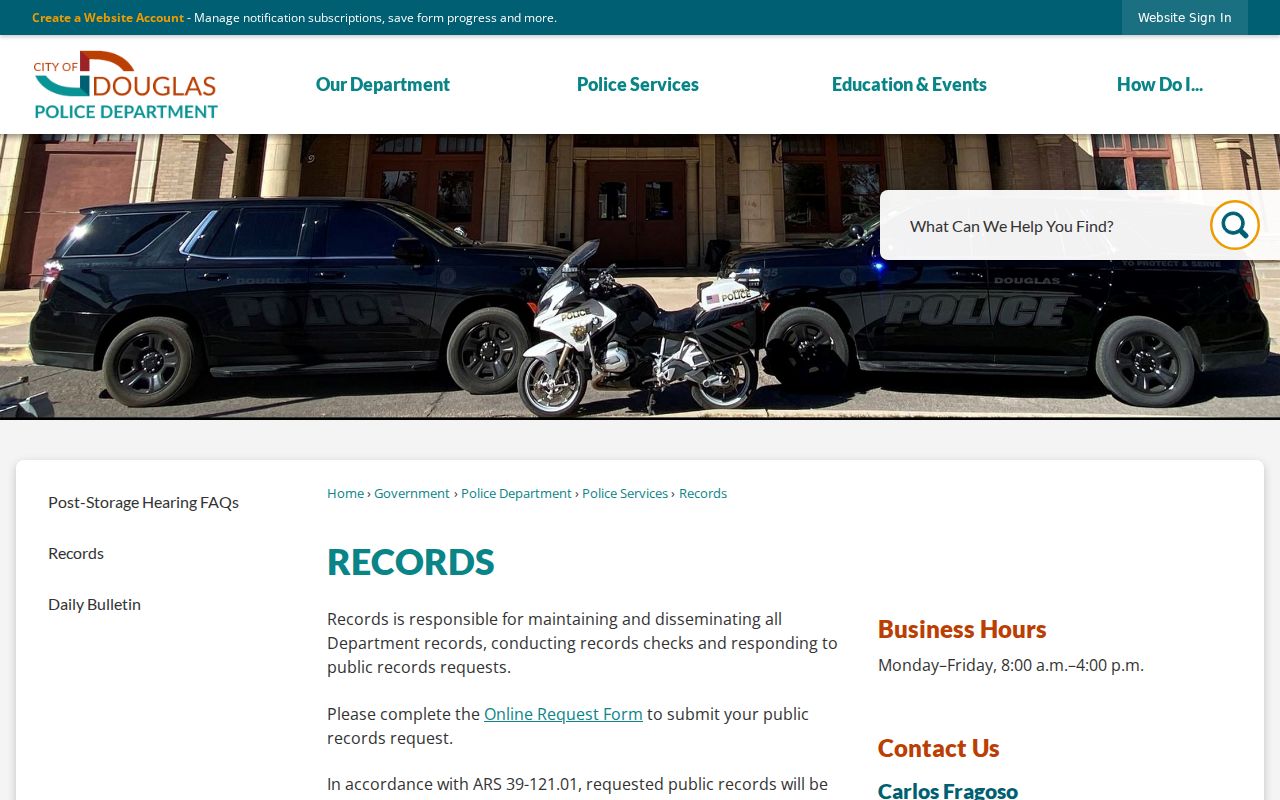
This is the right city office for a Douglas police report, but not for a court judgment or the statewide Arizona rap sheet.
The online form's exact field labels were not exposed in the research capture. Provide enough detail to locate one record, including a report number if known, event date, location, names tied to the report, and useful contact information.
Douglas Police Department Records
A Douglas police report reflects what officers recorded about an event. It may include an incident narrative, offense classification, arrest details, and items that can lawfully be released. It is not a court disposition. A report may exist before prosecutors file a charge, and a later court result may differ from the offense first listed by police.
Requests involving several locations or private and sensitive information may need more review and redaction. The department cites A.R.S. § 39-121.01 and states that public records will be produced promptly, though time depends on the request's complexity. Narrow requests tend to help the records desk identify and review responsive material.
When another agency made the arrest, direct the report request there. A sheriff report belongs with Cochise County Support Services, and a federal arrest belongs with the federal agency or court.
Douglas City and Police Records
Douglas has two public-records request paths. Police Records serves department material. The City Clerk is custodian of city records and routes non-police requests to the proper department. Sending a criminal incident request to the broad clerk route can add a handoff that the direct police form avoids.
| Channel | Best Fit | Published Terms |
|---|---|---|
| Police Records | Police incident, arrest, and department records | Online form; records desk Monday-Friday, 8:00-4:00 |
| City Clerk | Other city department and administrative records | Online or in-person form; clerk routes the request |
| Justice Court | Criminal traffic, misdemeanor, and early felony case records | Phone or counter request; no local document portal located |
The Douglas City Clerk public-records page documents the separate routing role.
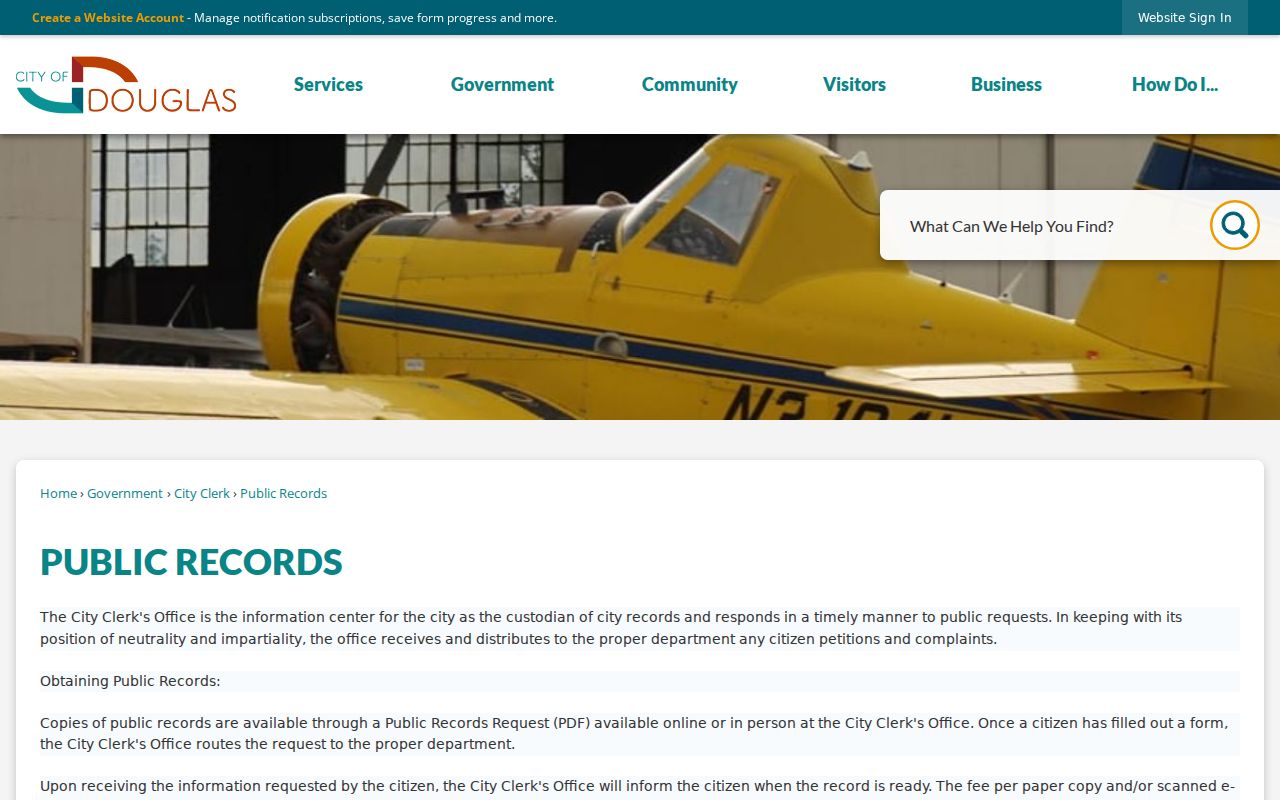
It confirms that the clerk can direct a city request, while the police desk remains the more precise first stop for police records.
City Hall is at 425 E. 10th Street, Douglas, AZ 85607, and its main phone is 520-417-7300. The clerk's 50-cent charge applies to each paper copy or scanned page sent by email and is due when the record is received. Police Records uses its own fee schedule and pickup process at 300 W. 14th Street. Keeping those addresses and charges separate helps prevent a requester from appearing at City Hall for a police report held at the department.
Douglas Arrests and Bookings
Douglas Police may make the arrest, but county detention staff create the booking record. Cochise County states that the main Bisbee jail and temporary holding facilities in Sierra Vista and Willcox house arrests made across the county by both sheriff deputies and local police. Douglas does not maintain a separate long-term city jail for this record path.
Look to Douglas Police for the agency report. Ask county detention sources about custody and release. Once charges are filed, use the court docket for arraignment, pleas, hearings, orders, and disposition. These records can post at different times, so a new arrest may not yet appear as a completed court case.
The sheriff no longer publishes its Mugshots and Inmate List on the county webpage after a September 2024 legal review. A missing online list does not erase the booking record. Use the official agency and court request channels instead.
Douglas Police Report Pickup Rule
Douglas Police says a completed report is destroyed if it is not picked up within 14 days after notification. That local rule is easy to miss. A requester should monitor the contact method given on the form and respond once the records desk says the report is ready.
Fees also depend on format. The published schedule lists 50 cents per 8.5 by 11 page and $10 per CD. Additional charges may apply, so the records desk should confirm a request-specific total before pickup. The city clerk separately lists 50 cents for each paper copy or scanned email page.
| Douglas Record Product | Published Amount |
|---|---|
| Police report, standard page | $0.50 per 8.5 by 11 page |
| Police records CD | $10 |
| City Clerk paper or scanned email page | $0.50 per page |
Note: Douglas Police notes that other fees can apply, so ask the records clerk for the amount tied to the exact request.
Municipal Court Records in Douglas
The Douglas city directory lists Municipal Court at 520-805-5640. The Cochise County directory lists the same number for Douglas Justice Court at 1012 N. G Avenue, Suite 237. Because the routing labels overlap, callers should describe the charge and confirm whether the record is a municipal matter or part of the Justice Court docket before ordering a copy.
| Court Name | Douglas court channel and Douglas Justice Court; confirm jurisdiction when calling |
|---|---|
| Case Types Heard | Justice Court misdemeanors, criminal traffic, felony initial appearances, and preliminary hearings; city matters as routed |
| Case Lookup Channel | 520-805-5640 or the court counter; statewide Public Access may show eligible case data |
| Criminal Extensions | Criminal department ext. 5; criminal traffic and felony ext. 4 |
| What the Docket Shows | Filed charge, hearings, pleas, orders, disposition, fines, and related public entries |
Arizona Public Access excludes some material, including sealed cases, juvenile delinquency information, victim and witness data, orders of protection, and local ordinance charges. A counter request can be necessary even after an online search.
The Douglas directory identifies Justice of the Peace Alma Vildosola for the county court. It also assigns extension 3 to small claims, civil matters, and evictions, and extension 8 to weddings. Those noncriminal choices are useful routing clues: a caller seeking a criminal case should avoid the general civil path and ask for extension 5 or 4 based on whether the issue is a criminal department matter or criminal traffic and felony proceeding.
Douglas Court Number Routing
The shared phone number is useful once the correct extension is known. Criminal department calls use extension 5. Criminal traffic and felony matters use extension 4. Orders of protection and harassment matters use extension 7, while civil traffic uses extension 6. The same directory also separates civil, small claims, eviction, and wedding functions.
The Douglas city directory gives the city-side contact listing used to compare the court and police routes.
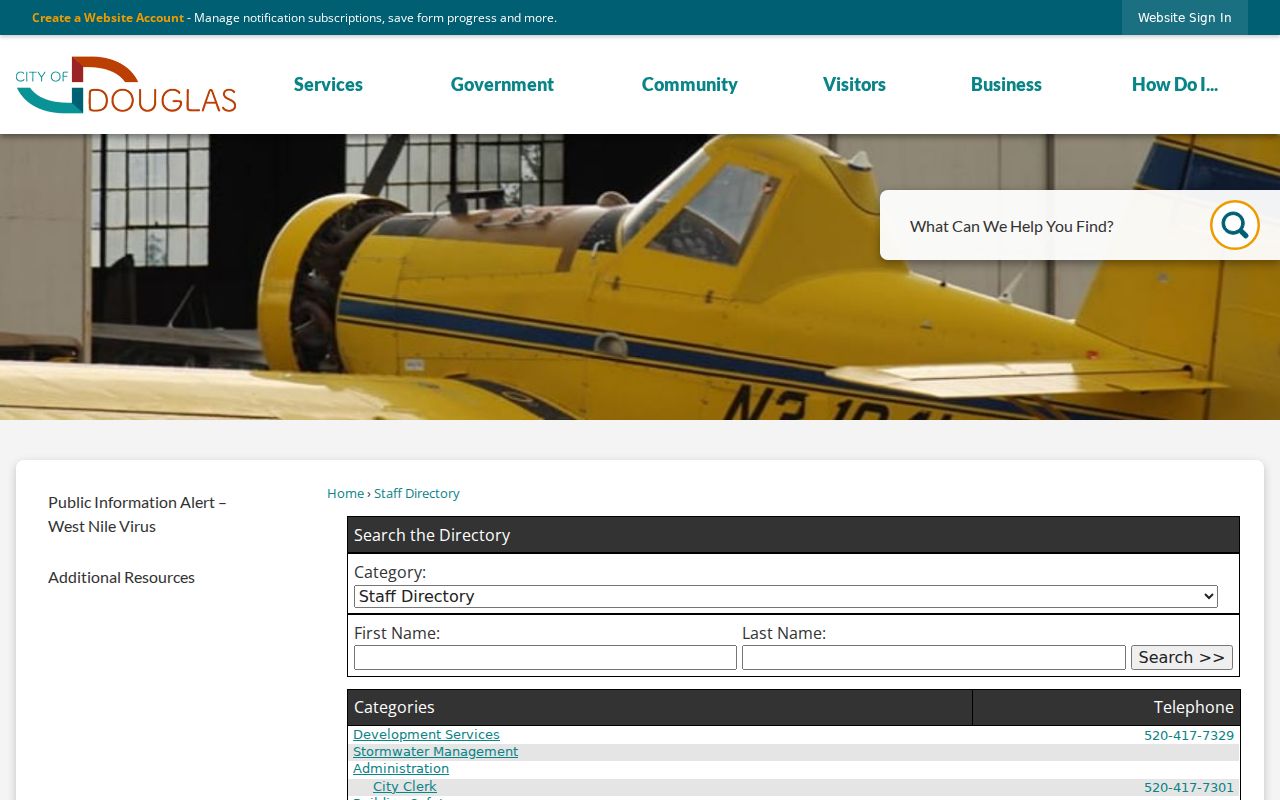
The directory makes phone access direct, but it does not replace a docket search or prove which jurisdiction filed a particular charge.
Have a case number ready if one is available. If not, give the person's name, approximate filing date, and charge type, then ask staff which court owns the record.
Where Douglas Records Go
Douglas Police creates the agency record, county detention creates a booking record when custody follows, and the court creates the case file. Fingerprint-supported arrest and final disposition information may be reported to the Arizona Department of Public Safety Central State Repository. Each layer has a different purpose and update cycle.
Record flow: Douglas Police Department › Cochise County Courts › Arizona Department of Public Safety Central State Repository
A police report is not the state rap sheet. The court file is the better source for a plea, dismissal, verdict, or sentence. Arizona DPS does not offer a public name-based criminal-history search to private citizens, but a person can use its fingerprint-supported process to review and challenge that person's own state record.
Douglas Reports and State Records
A records check performed by Douglas Police is limited by the department's own holdings and release rules. It should not be read as a complete Arizona criminal-history record. Events handled outside Douglas, older court outcomes, and entries held only by another agency may not appear in the city response.
For a known Douglas event, start with the police report and then locate the court disposition. For a review of your own statewide repository record, use the Arizona DPS fingerprint-based process. This comparison matters because a city report describes one agency's event, while the repository combines reportable fingerprint-based arrests and dispositions from criminal justice agencies across Arizona.
Douglas Border Record Boundaries
Douglas sits on the international border, so local and federal records are easy to confuse. A Douglas Police event and a Cochise County prosecution remain in local or state systems. A federal immigration, customs, or federal criminal matter may belong to the responsible federal agency or the U.S. District Court for the District of Arizona.
Use the arresting agency and court caption as the guide. The location alone does not decide which portal holds the record. PACER serves federal court cases, while Douglas court staff and Arizona Public Access serve eligible state and local filings.
This boundary is especially important when the police report refers to another agency. A local report may document assistance without containing the federal case file or later federal disposition.
Douglas Police can release only the responsive city record it maintains. It cannot supply a customs investigative file, a federal charging document, or a federal prison record. Conversely, a federal search will not replace the Douglas report when city officers created the local incident file. Read the agency name on the first page, then use that name to select the records desk before broadening the search.
Public Access Rules in Douglas
Douglas links its records process to Arizona Public Records Law. Public records should be produced promptly, but the agency may need more time for a broad request, multiple locations, private data, or sensitive material. Police and court custodians may redact protected information rather than release an unreviewed file.
Key Statutes:
A.R.S. § 39-121 supports inspection of public records during office hours.
A.R.S. § 39-121.01 covers record maintenance and prompt access duties for public bodies.
A.R.S. § 41-1750 controls state repository reporting and criminal-history dissemination.
Sealed cases, juvenile information, victim details, and active investigative content can limit access. To correct a record, contact the office that created the disputed entry: Douglas Police for its report, the court for its docket, or Arizona DPS for the statewide record-review challenge process.